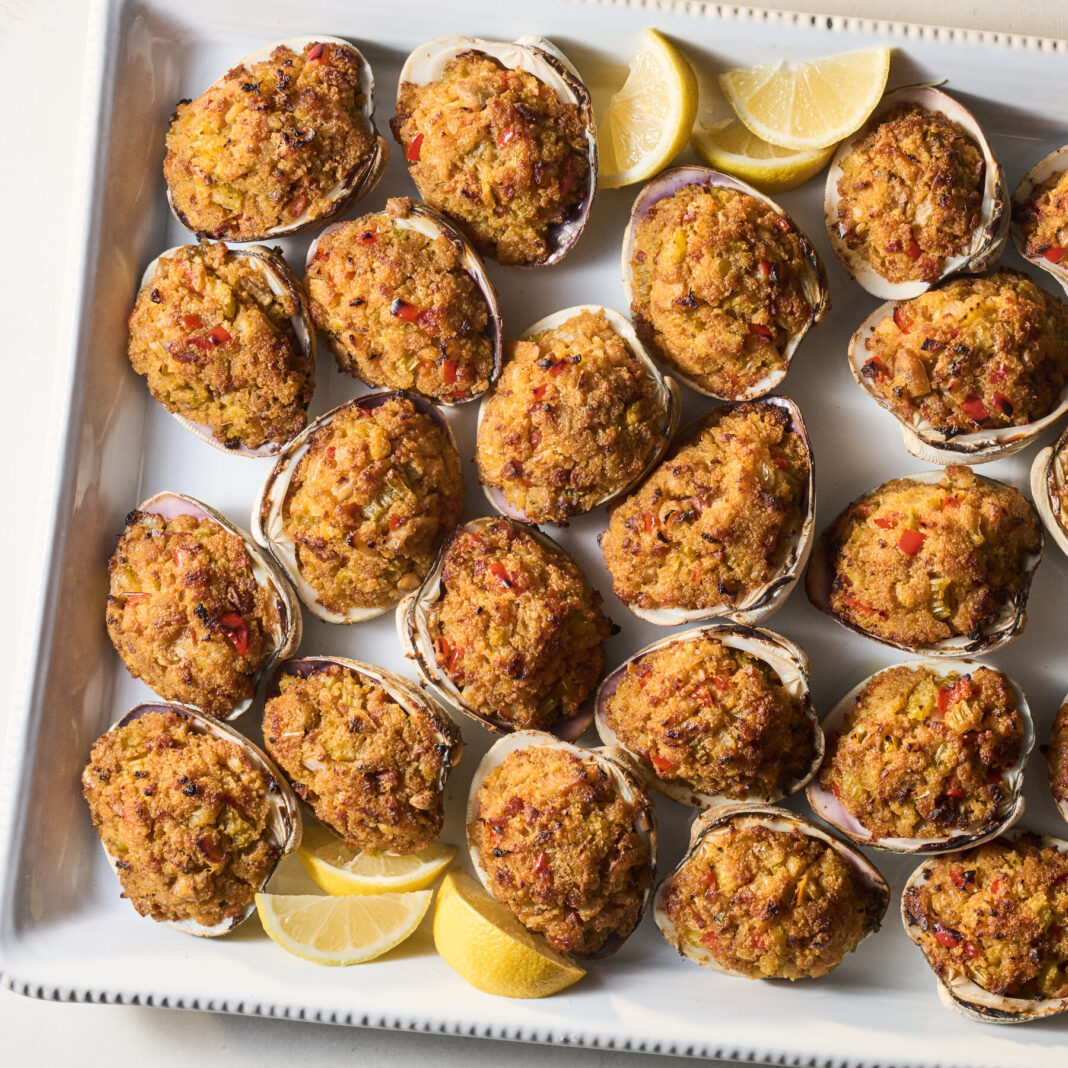
The stuffed quahog, known locally as a “stuffie,” is gaining attention as an affordable alternative to the region’s pricey seafood staples. With lobster rolls now routinely hitting $30 or more, the hyperlocal New England dish offers a budget-friendly option that remains deeply tied to coastal tradition.
Unlike lobster, which often carries a premium at restaurants and markets, quahogs are abundant and inexpensive. These hard-shell clams are harvested throughout New England, making them a practical choice for home cooks looking to stretch their seafood budget without sacrificing flavor.
The dish itself is straightforward. A large quahog is shucked, chopped, and mixed with seasoned breadcrumbs, aromatics, and often salt pork or chouriço. The mixture is then stuffed back into the shell and baked until golden. The result is a savory, briny bite that pairs well with crackers or hot sauce.
Stuffies are especially suited to home preparation. Most of the work happens before cooking, and the ingredients are flexible. Cooks can adjust the seasoning, add herbs, or swap in different proteins depending on what is available. The shells themselves act as natural serving vessels, which cuts down on cleanup.
The dish also carries a strong sense of place. Each coastal community has its own version, with variations in spice level, breadcrumb texture, and stuffing density. This hyperlocal character makes stuffies a conversation starter and a way to connect with regional foodways.
For those new to the dish, sourcing quahogs is simple. Most fishmongers and many supermarkets along the East Coast carry them fresh. If quahogs are unavailable, other hard-shell clams can be substituted, though the larger size of the quahog makes it the classic choice.
Food writers and chefs have noted the appeal of stuffies as a practical, flavorful option in a time of rising seafood prices. The dish delivers a satisfying meal at a fraction of the cost of other shellfish, making it an increasingly attractive choice for home cooks.
The stuffed quahog may not carry the same prestige as a buttered lobster roll, but it offers something arguably more valuable: accessibility. It is a reminder that good food does not need to be expensive, and that some of the best regional dishes are the ones that stay close to home.