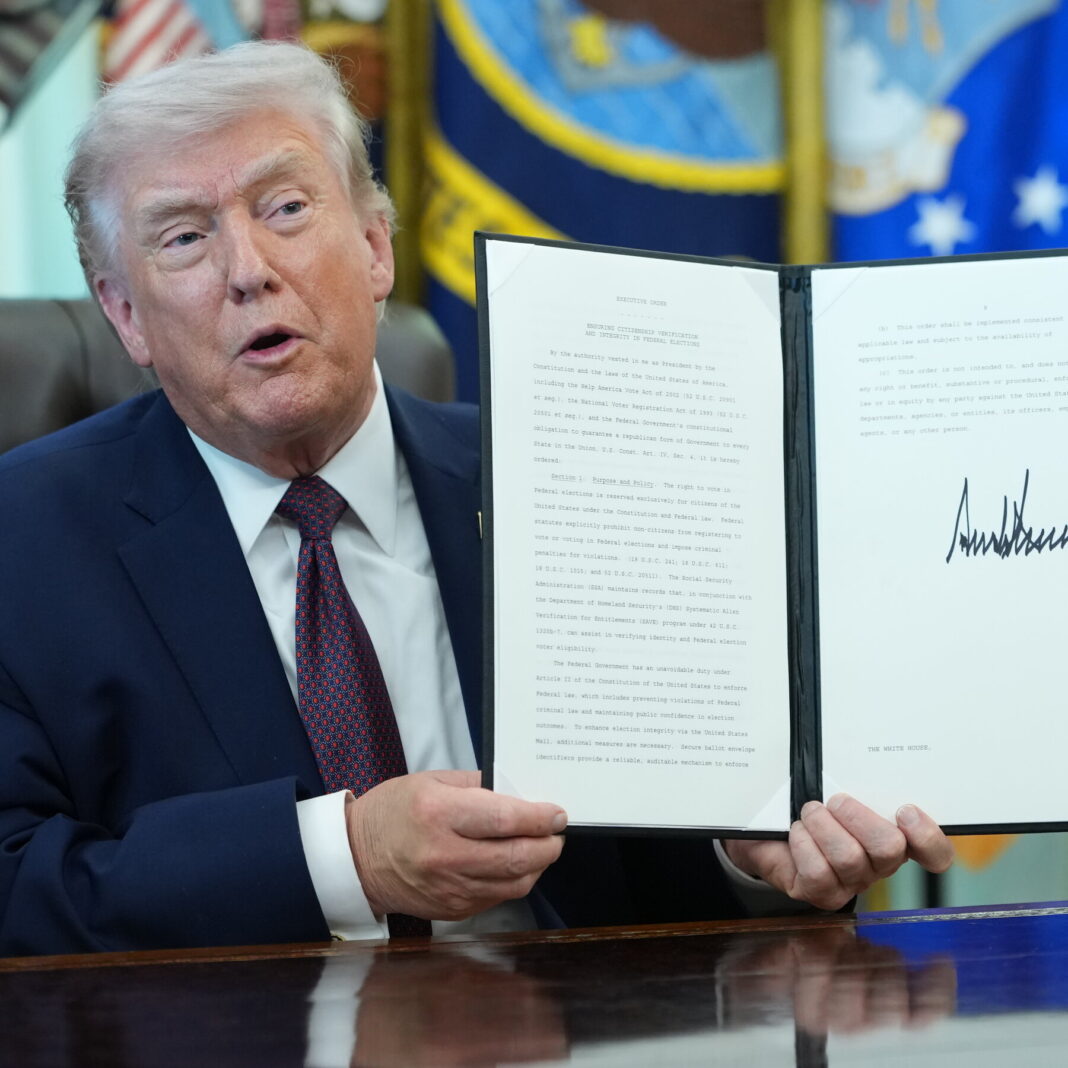
President Trump is working to establish state-by-state lists of citizens, aimed at determining voting eligibility. His administration has acknowledged these lists may be unreliable.
The proposed system would require states to provide records to identify noncitizens. Officials plan to cross-reference data from federal and state databases.
Critics argue the lists could be incomplete or contain errors. They point to existing voter registration systems that already verify citizenship status.
The push follows Trump’s recurring claims about noncitizen voting. Evidence of widespread ineligible voting remains scarce, according to election officials.
State governments hold primary authority over voter rolls. Some states have resisted federal attempts to access their databases, citing privacy concerns.
The administration views the lists as a tool to enforce election laws. Supporters say it could prevent fraud, though no major fraud cases have been tied to citizenship issues.
Legal experts question the project’s feasibility. They note that citizenship data is not uniformly tracked across all states and federal agencies.
The effort could face court challenges if it conflicts with state voting rights laws. The outcome may hinge on how data collection and use are regulated.
Implementation timelines remain unclear. The administration has not specified when or how the lists would be compiled and shared.