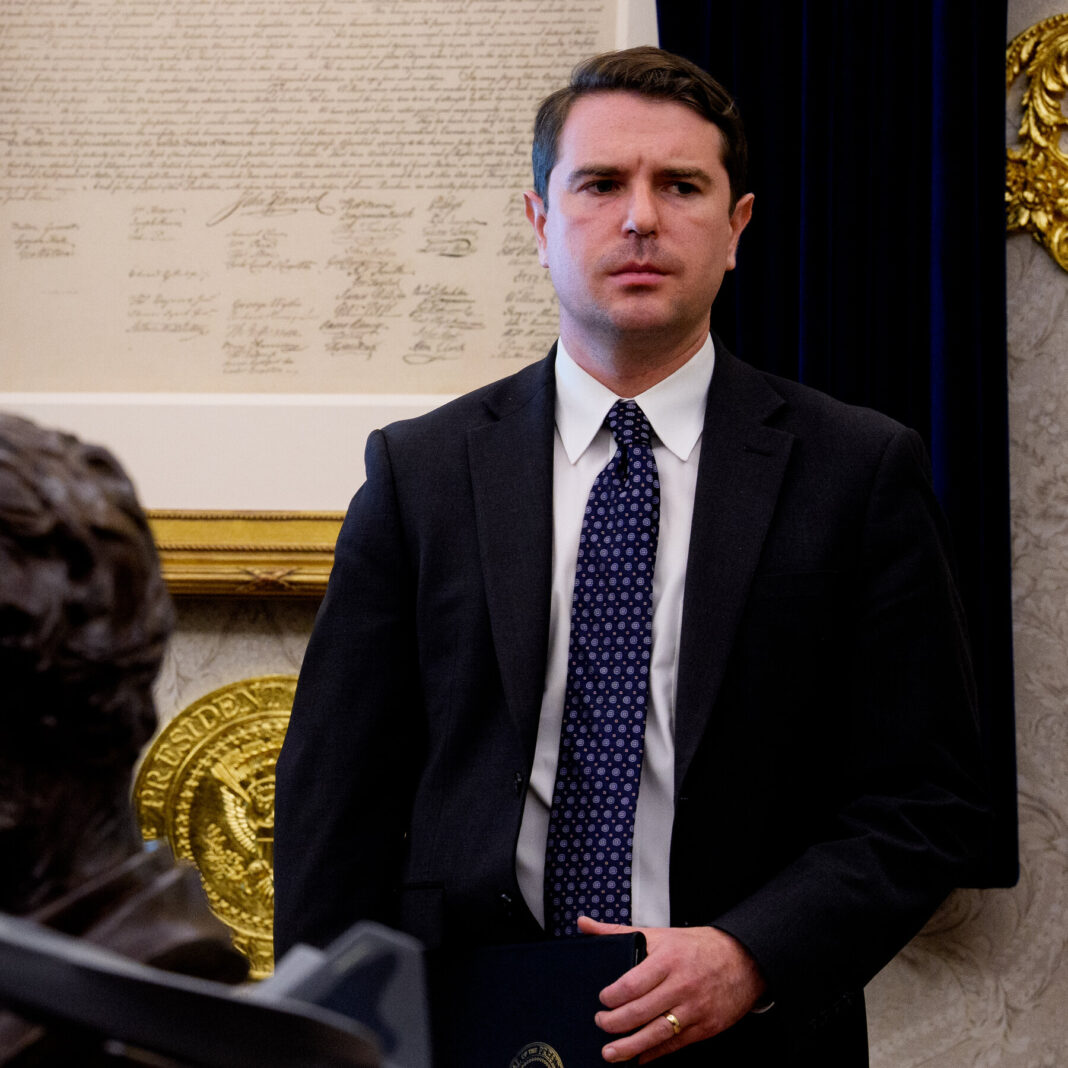
President Trump has selected Ben Moss, a former aide to Vice President JD Vance, to serve as White House staff secretary. The appointment marks one of the few significant personnel shifts in the West Wing during Trump’s second term.
Moss previously worked on Vance’s team, where he handled policy coordination and legislative affairs. His new role places him at the center of White House operations, managing the flow of documents and decisions that reach the president.
The staff secretary position is often described as a gatekeeper role. It involves reviewing paperwork, coordinating with agencies, and ensuring that policy proposals are vetted before they land on the Oval Office desk.
Moss’s promotion signals a preference for internal candidates familiar with the administration’s priorities. He has been part of the broader conservative policy network that gained influence during the current term.
The move comes amid a period of relative stability in the West Wing. Unlike previous transitions, Trump has kept most senior aides in place, with only select roles seeing turnover.
Political observers note that Moss’s ties to Vance could strengthen the vice president’s influence in the administration. This appointment may also reflect an effort to align staff operations more closely with the vice president’s office.
White House officials have not disclosed the exact timeline for Moss’s start date. He is expected to assume his duties in the coming weeks, following a standard onboarding process.
Moss replaces the outgoing staff secretary, whose departure was announced earlier this month. The prior officeholder moved to a position in the private sector after serving for over a year.
The staff secretary’s office has historically played a quiet but critical role in shaping presidential agendas. Those in the role often work behind the scenes to prioritize issues and manage internal communications.
With Moss’s appointment, the administration continues to favor continuity over sweeping reorganization. His experience within the vice president’s orbit may bring a smoother coordination between the two offices, though no major policy shifts are anticipated as a result.