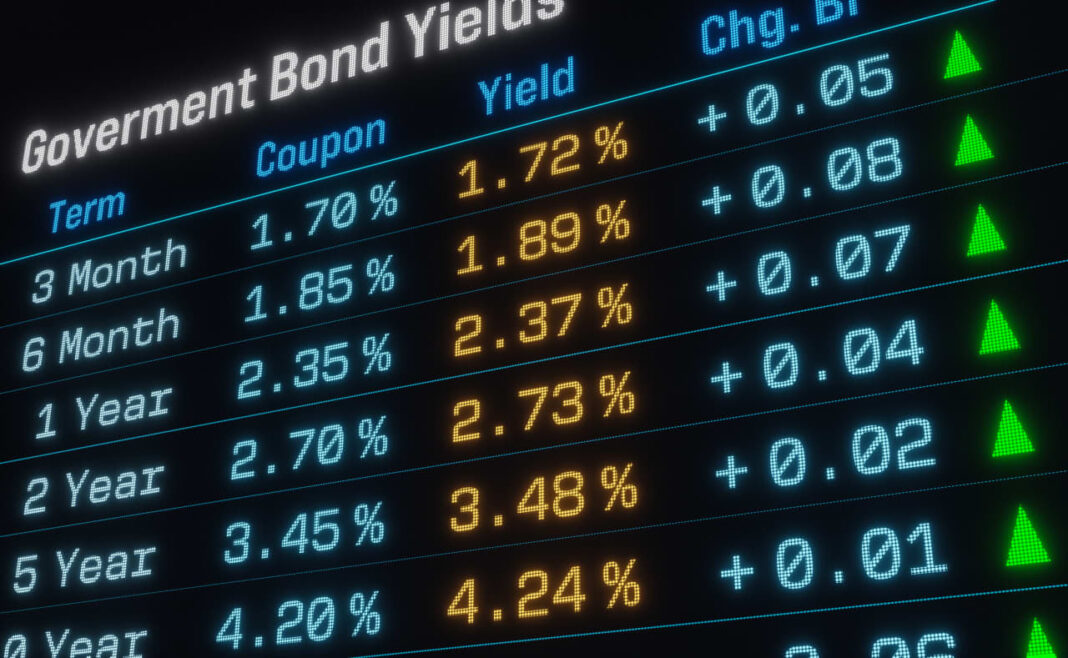
Global bond markets are experiencing significant volatility, with yields climbing across major economies as U.S. Treasurys face sharp selling pressure. The ripple effect has reached the U.K., Japan, and other markets, underscoring the interconnected nature of global fixed-income investing.
The selloff in U.S. government debt has accelerated in recent sessions, driven by shifting expectations around monetary policy and inflation. As yields on U.S. bonds rise, investors are recalibrating their positions worldwide, leading to similar upward pressure on borrowing costs in other countries.
In the U.K., government bond yields have jumped noticeably, reflecting both domestic economic concerns and the spillover from U.S. market movements. Traders are monitoring how the Bank of England will respond, with some anticipating a more cautious approach to easing policy amid rising global rates.
Japan has also seen a rise in bond yields, a notable development for a country that has long relied on ultra-low interest rates. The move suggests that even the Bank of Japan’s yield curve control measures are facing pressure from the global trend toward higher borrowing costs.
European markets are not immune, with yields on benchmark bonds in Germany and France also trending upward. The synchronized movement highlights how investors are reassessing risk premiums across developed economies, rather than treating each market in isolation.
The broader implications are significant for borrowers and investors alike. Higher yields translate into increased costs for governments and corporations seeking to raise capital, while also reshaping returns for fixed-income portfolios that had grown accustomed to low rates.
Analysts point to a combination of factors fueling the bond market turbulence, including resilient economic data and concerns about persistent inflation. These forces are prompting market participants to demand higher compensation for holding longer-dated debt.
For investors, the current environment calls for careful attention to duration and yield dynamics. The global nature of this selloff suggests that diversification alone may not shield portfolios from the impact, as correlated moves become more pronounced across markets.
Looking ahead, the direction of U.S. monetary policy remains a key driver. Any signals from the Federal Reserve on future rate cuts or hikes could either calm or further unsettle global bond markets, making upcoming data releases and central bank communications critical for market watchers.