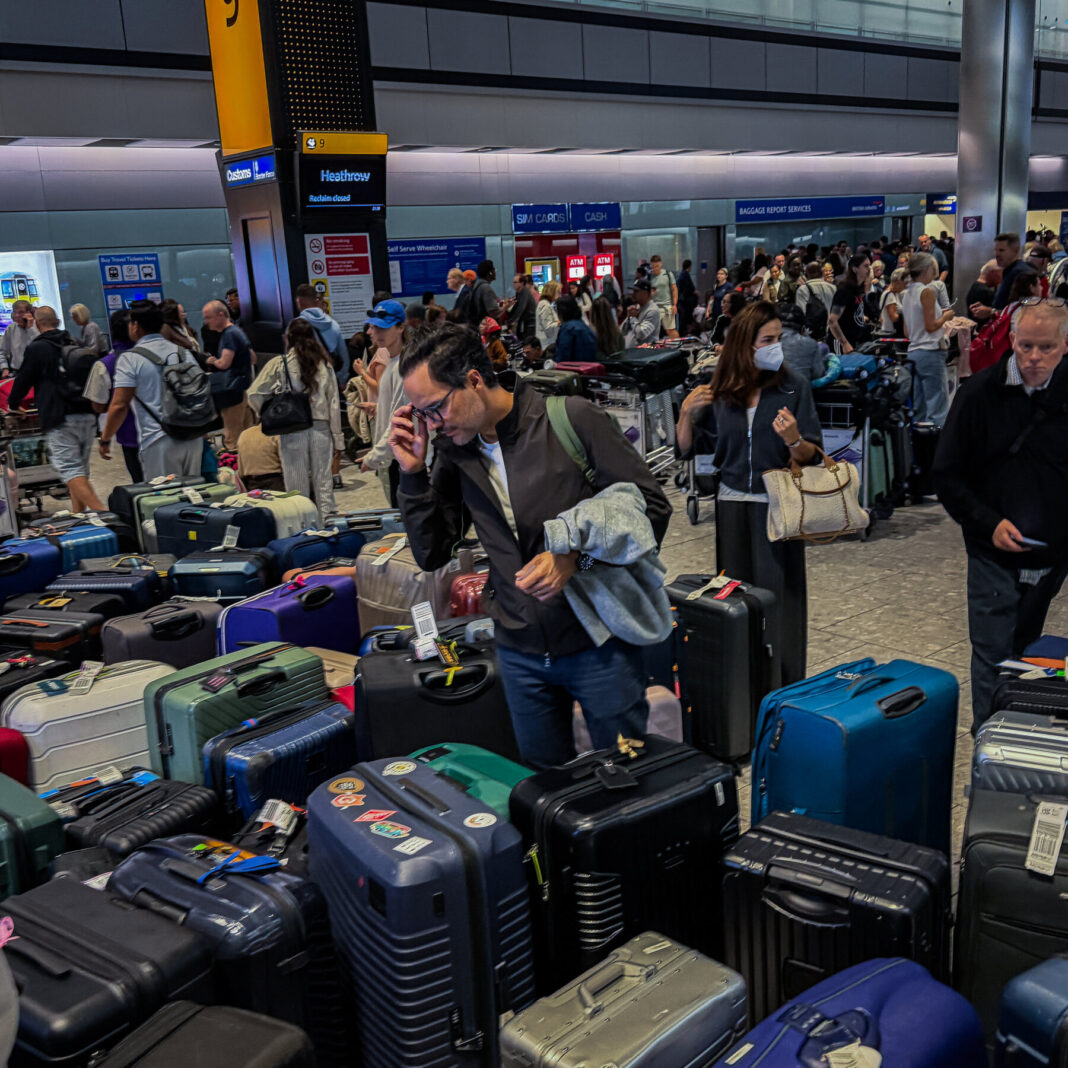
Heathrow Airport faced severe disruption this week after an air-traffic control failure crippled operations across British airspace.
More than 2,000 flights were delayed, canceled, or diverted over a two-day period, according to industry tracking data.
The problem began with a technical fault inside the UK’s central air-traffic control system, which manages flight paths nationwide.
Controllers were forced to slow the flow of aircraft, creating a ripple effect that spread to airports across the country.
Passengers described long queues, missed connections, and hours spent waiting on grounded planes at Heathrow and other hubs.
Airlines canceled short-haul routes first, then trimmed long-haul schedules as the backlog grew through the second day.
Travelers reported limited information from carriers, with many turning to social media to share frustration over the delays.
The disruption extended beyond Heathrow, affecting Gatwick, Manchester, and Edinburgh as airspace capacity remained restricted.
Aviation analysts noted that even after the technical fix, recovery takes time because aircraft and crews are out of position.
The incident raised fresh questions about the resilience of the UK’s aging air-traffic control infrastructure.
Officials have not announced a precise cause, but ruled out a cyberattack in early statements.
Heathrow advised passengers to check with their airlines before traveling to the airport.
Normal schedules were expected to resume gradually, though residual delays were likely into the weekend.