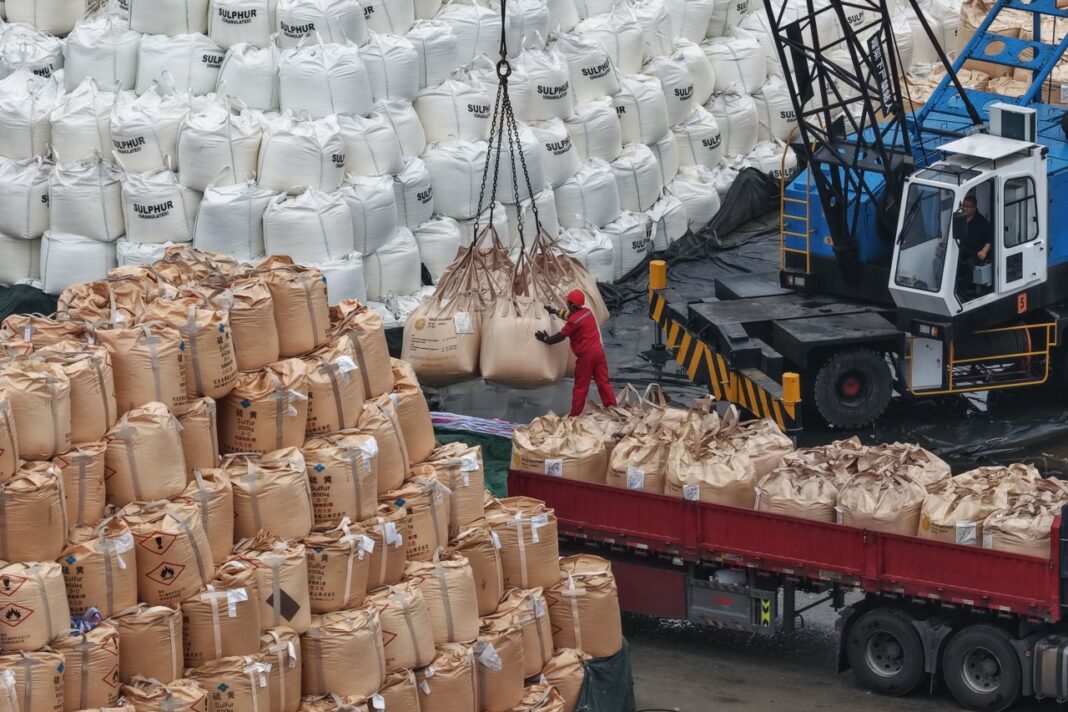
New Chinese export restrictions are further tightening global sulfuric acid markets. The chemical, essential for producing fertilizers, metals, and petroleum products, is facing supply strains amid escalating geopolitical tensions.
Iran’s involvement in the ongoing conflict has added pressure to an already fragile supply chain. The country is a significant producer and exporter of sulfuric acid, and disruptions to its output are creating ripple effects worldwide.
China’s recent move to limit exports of the chemical has compounded the problem. As a major supplier, any reduction from Chinese producers directly impacts global availability and pricing.
Sulfuric acid is the world’s most widely used industrial chemical by volume. Its applications range from manufacturing phosphate fertilizers to processing copper, zinc, and uranium.
The supply crunch is raising costs for industries dependent on the chemical. Fertilizer producers, already facing high input prices, are among those most affected by the tightening market.
Market analysts expect further volatility in the coming months. The combination of geopolitical instability and export controls is likely to keep supplies constrained.
Buyers are now scrambling to secure alternative sources. Some are looking to other producing nations, though capacity remains limited globally.
The situation underscores how regional conflicts can disrupt critical raw material flows. For many industrial sectors, the impact is becoming increasingly difficult to ignore.