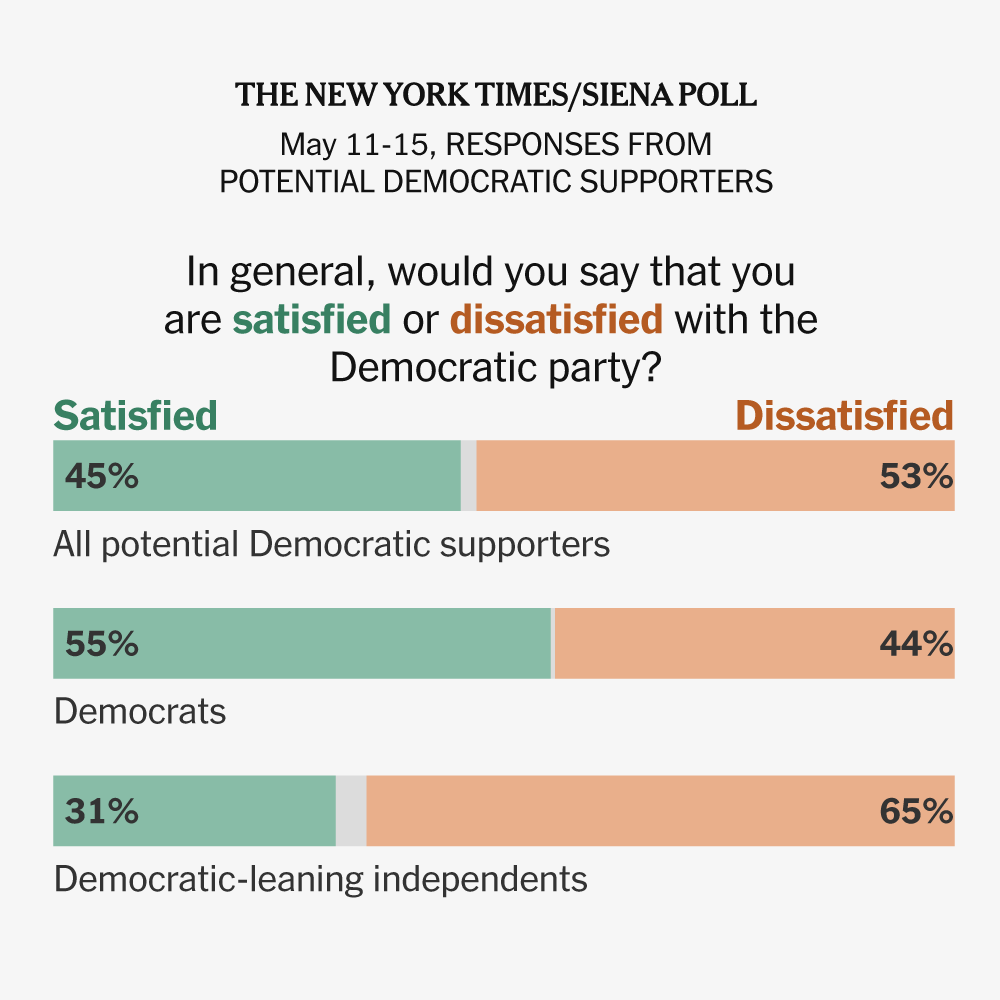
Democratic voters are entering the midterm cycle with a combative and anti-establishment mood, according to a New York Times/Siena poll. The survey reveals significant dissatisfaction within the party, coupled with sharp disagreements over its future direction.
Despite overall enthusiasm for the upcoming elections, internal divisions are running deep. Many Democratic voters express frustration with party leadership and its current priorities.
The poll indicates a growing rift between progressive and moderate factions. This divide could complicate efforts to unify the party ahead of critical House and Senate races.
Voters are particularly unhappy with the party’s stance on key issues like the economy and immigration. Many feel their concerns are not being adequately addressed.
Anti-establishment sentiment is strong, with a notable share of Democrats favoring candidates who challenge the status quo. This trend mirrors broader national frustration with political institutions.
While the party still holds an advantage in generic ballot tests, the internal friction poses risks. Republican strategists see an opportunity to capitalize on Democratic disunity.
The findings suggest a challenging road ahead for party leaders trying to craft a cohesive message. Tailoring appeals to a fractured base while winning over independents could prove difficult.
Midterm turnout often hinges on voter enthusiasm, and the current mood may benefit higher-energy factions. However, it could also depress turnout among less satisfied segments.
The poll underscores a fundamental tension: Democrats remain competitive, but their internal struggles could erode that edge. How the party navigates these divides will shape the outcome of November’s elections.