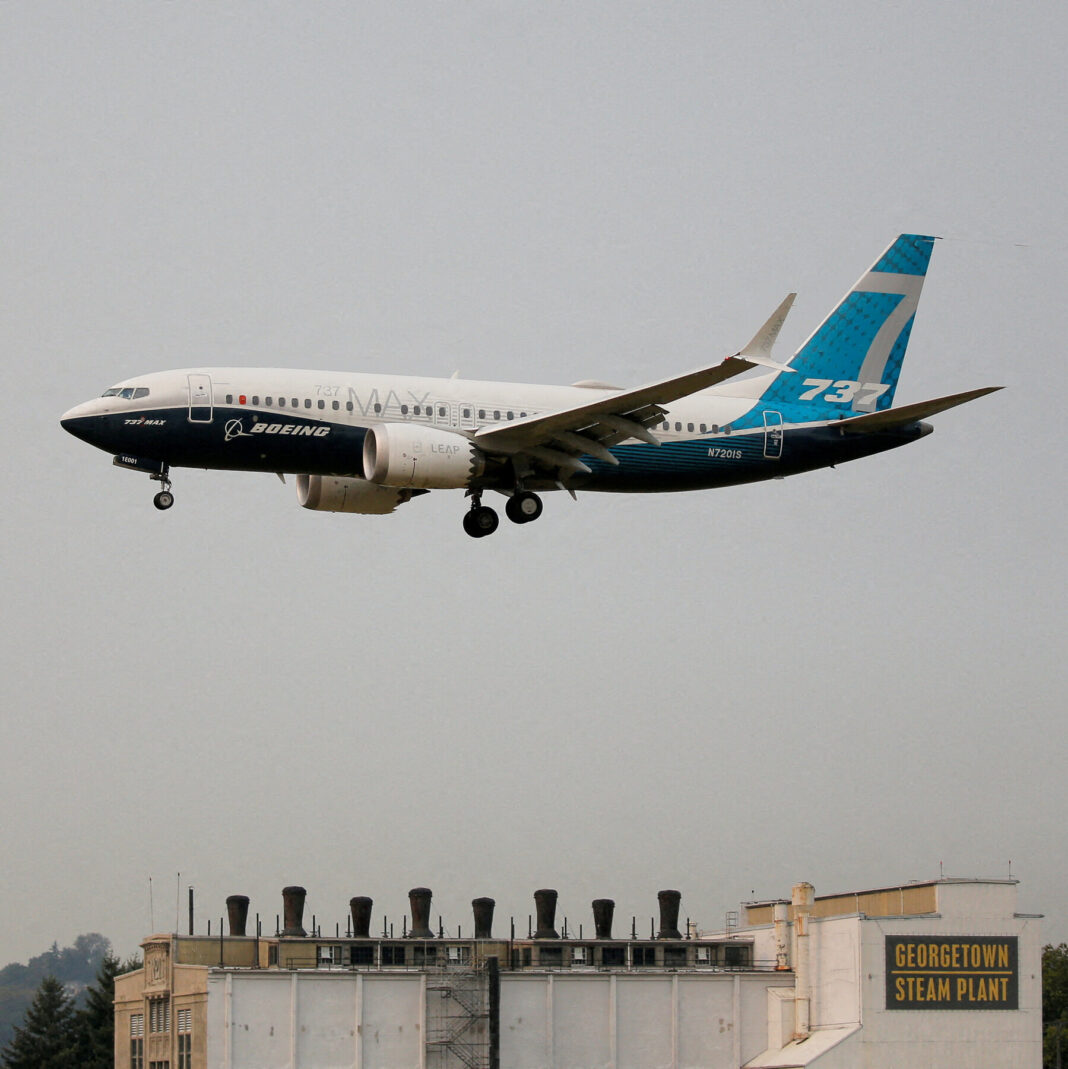
The Federal Aviation Administration has officially certified Boeing’s 737 Max 7, the smallest version of the company’s best-selling aircraft family. The approval ends a multi-year delay for the model, which faced repeated regulatory hurdles.
The Max 7 is designed to carry up to 172 passengers on shorter routes. It is positioned as a replacement for older, less efficient models in the single-aisle market. Boeing originally targeted certification for 2022.
Regulatory scrutiny intensified after two fatal crashes involving the larger Max 8 model in 2018 and 2019. These incidents led to a global grounding of the Max fleet and triggered a comprehensive review of Boeing’s design and certification processes.
The FAA required several software and system updates before granting approval. Boeing also had to address issues related to engine anti-icing systems and cockpit alerting. The company confirmed that all mandated changes are now incorporated into the final production standard.
Airlines have placed firm orders for the Max 7, with several U.S. carriers expecting first deliveries within the coming months. The model offers a lower operating cost per seat compared to previous-generation jets. Budget carriers, in particular, are likely to benefit from its range and capacity balance.
Boeing still faces separate certification work for the larger Max 10 variant. That model has encountered delays tied to new cockpit alerting requirements. The FAA has not provided a timeline for its approval.
The certification marks a step forward for Boeing’s commercial division, which has struggled with supply chain issues and quality control concerns. The company has also dealt with production halts and increased oversight from regulators. The Max 7 approval does not resolve these broader challenges but gives airlines a new tool for fleet planning.
Analysts expect the Max 7 to compete directly with Airbus’s A220-300. The two aircraft serve similar market segments, though the Boeing jet offers higher passenger capacity. Airlines will weigh fuel efficiency and maintenance costs when choosing between the models.
The FAA’s decision was based on extensive flight testing and data analysis. Agency officials stated that the aircraft meets all current safety standards. Boeing has pledged continued transparency during the aircraft’s operational rollout.