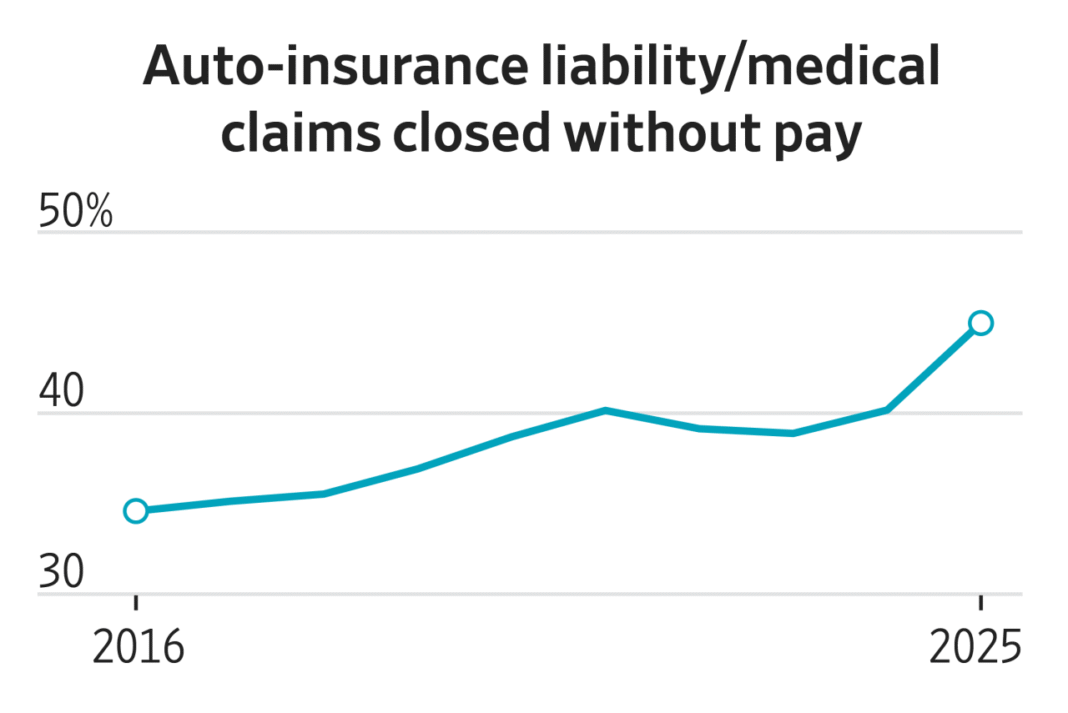
Auto insurers denied payment on nearly half of all auto liability and medical claims they closed last year, according to a Wall Street Journal analysis. The data shows that 45% of such claims ended without any payout to the policyholder or the other party involved.
The findings point to a growing trend in the industry, where insurers are increasingly contesting claims or finding reasons to reject them. This shift leaves more drivers personally responsible for accident-related costs, including vehicle repairs and medical bills.
Industry experts attribute the rising denial rate to stricter policy language and more aggressive claims review processes. Insurers are also using advanced data analytics to flag claims they suspect may be inflated or fraudulent.
For policyholders, the practical impact is significant. A denial can mean out-of-pocket expenses that run into thousands of dollars, even when the driver carried what they believed was adequate coverage.
Many drivers only discover the limits of their policies after an accident occurs. Standard policies often contain exclusions and conditions that are not clearly explained at the time of purchase, leaving policyholders with unexpected gaps in coverage.
The analysis reviewed claims resolved during the previous year, covering both bodily injury and property damage categories. Medical claims showed a slightly higher denial rate than those for vehicle damage.
Regulators have taken note of the trend, with some state insurance departments launching reviews of carrier practices. Consumer advocates argue that insurers are prioritizing profit margins over their contractual obligations to customers.
Drivers can take steps to reduce their risk. Reviewing policy documents carefully, maintaining accurate records of vehicle condition, and documenting any accident scene thoroughly can strengthen a claim. Consulting an independent insurance agent before signing a policy may also clarify what is and is not covered.
The broader implication for the auto insurance market remains uncertain. If denial rates continue to climb, more drivers may seek alternative coverage options or push for regulatory changes that mandate clearer disclosure of policy limitations.