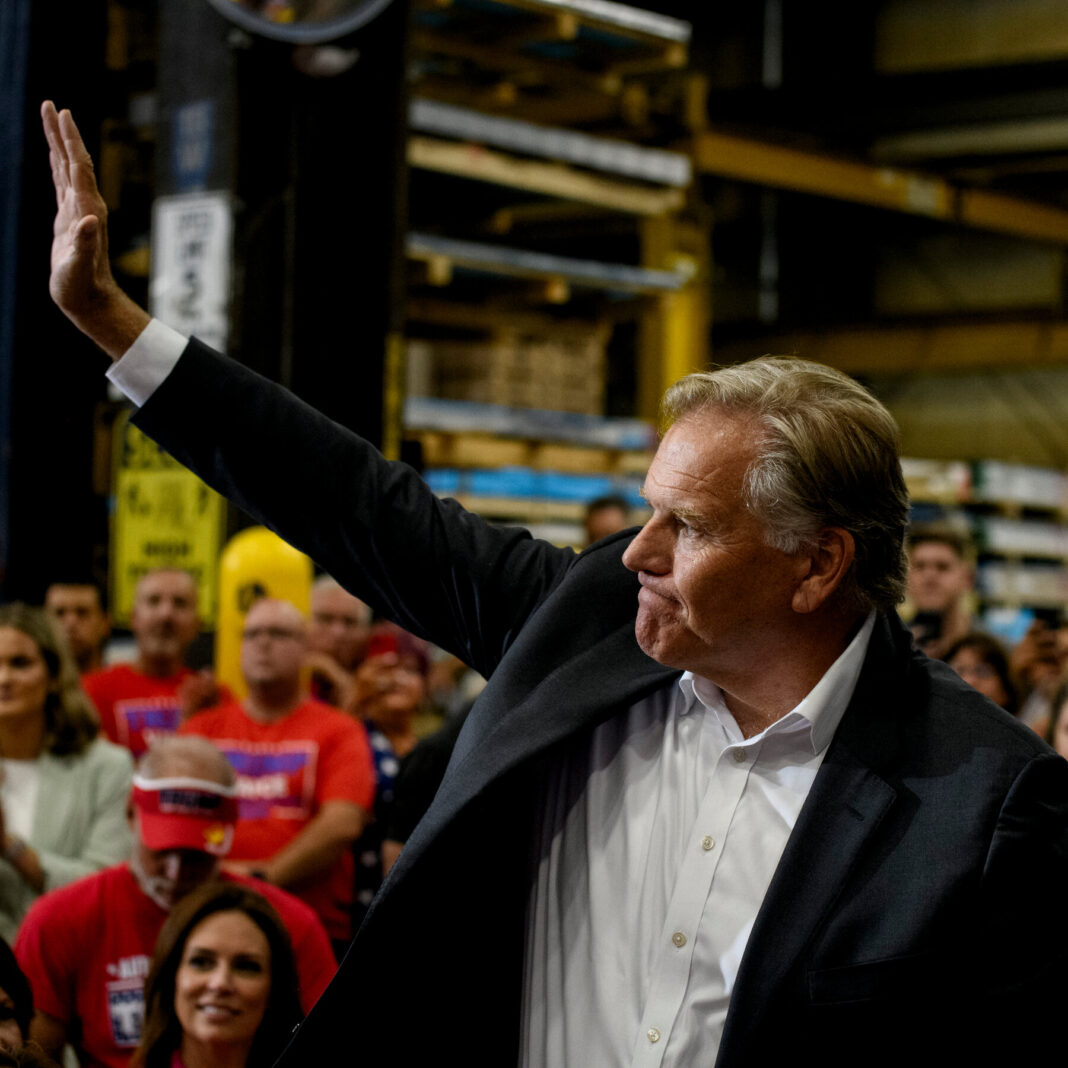
In Michigan, the Republican Senate nominee, Mike Rogers, has signaled a notable shift in his stance on election integrity. Once a vocal critic of former President Donald Trump, Rogers now suggests that additional scrutiny of the 2020 election results was justified. He has also claimed that voting irregularities contributed to his own Senate loss two years prior.
Rogers’ recent comments mark a departure from his earlier position. During his time as a congressman, he was known for a more moderate approach and openly criticized Trump’s claims of a stolen election. Now, as he campaigns for the Senate, his language has become more aligned with election skepticism.
The nominee pointed to unspecified irregularities in the 2020 contest, saying they warranted a closer look. He extended this argument to his previous Senate bid, indicating that the outcome was not fair. This narrative has become a central part of his current campaign strategy.
Political observers note that Rogers’ shift may reflect the broader dynamics within the Michigan Republican electorate. Primary voters have shown strong support for candidates who question election results. Rogers appears to be tailoring his message to secure that base ahead of the general election.
His new position has drawn both support and criticism. Allies argue that he is listening to constituents who have doubts about electoral processes. Detractors, however, accuse him of abandoning his earlier principles for political gain. They point to his past statements as evidence of inconsistency.
Michigan remains a key battleground state, and election issues continue to resonate with voters. Rogers’ stance could play a significant role in mobilizing the Republican base. At the same time, it may energize Democratic opponents who view election skepticism as a liability.
The campaign has offered few specifics on what irregularities Rogers believes occurred. When pressed for details, his team referred to broad concerns about voting procedures. They have not provided documentation or cited any official findings to support the claims.
As the election season progresses, Rogers’ shift will likely face further scrutiny. His ability to balance the demands of the primary base with the broader electorate will be tested. For now, the former congressman has firmly planted himself in a camp that questions the integrity of recent elections.
This development underscores the ongoing national debate over election trust. Michigan voters will ultimately decide whether Rogers’ new approach resonates or falters at the ballot box. The race remains competitive, with both sides watching closely.