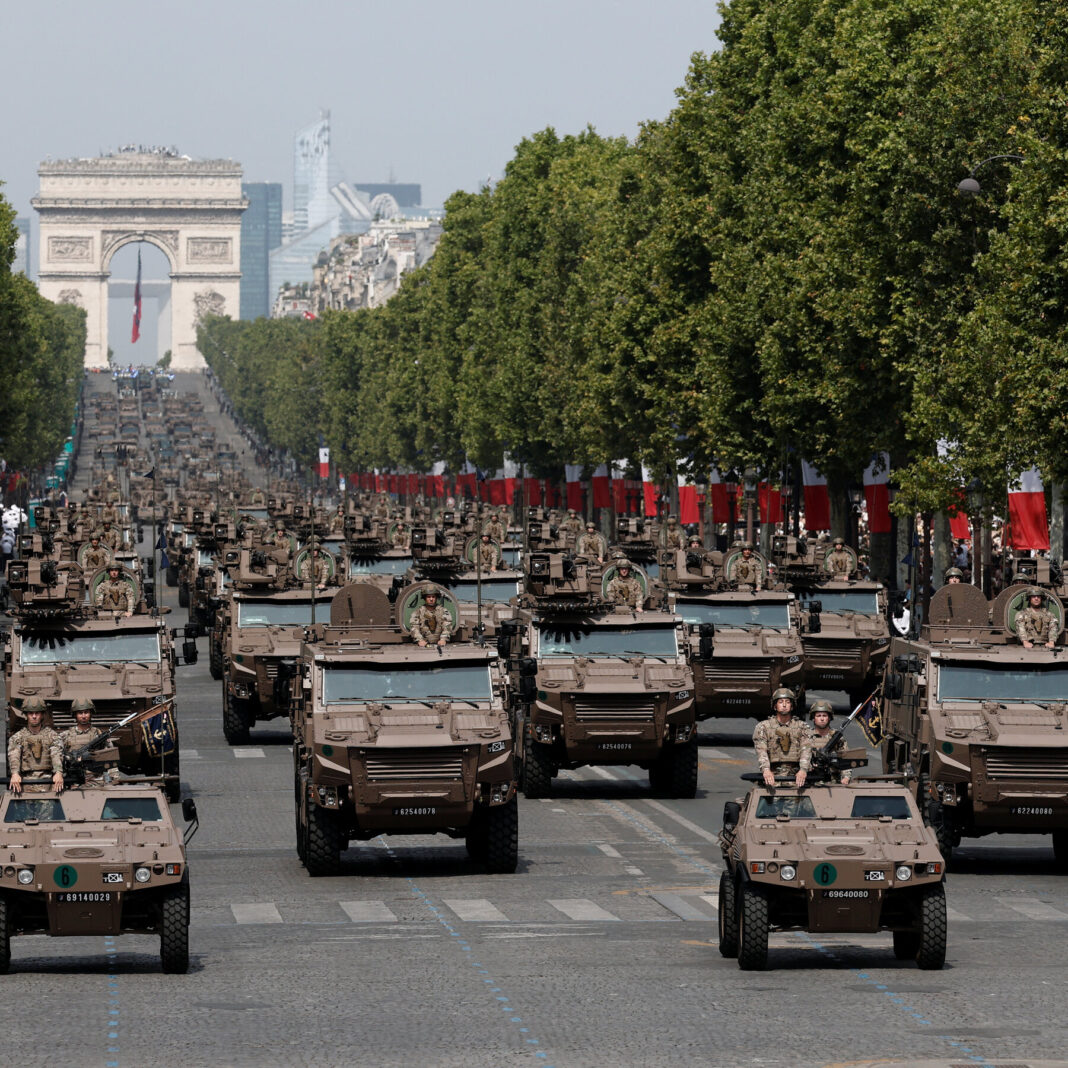
President Emmanuel Macron welcomed European allies to France’s annual Bastille Day military parade in Paris, a display of collective security and unity. The event underscored Europe’s growing defense ambitions amid global tensions.
Europe has taken a more assertive role in supporting Ukraine following Russia’s invasion. It has provided military aid and imposed sanctions on Moscow, signaling a shift toward independent action in Eastern Europe.
However, that influence does not extend to the Middle East. On Iran, European powers remain largely sidelined, deferring to Washington’s lead despite their diplomatic efforts.
The contrast highlights a persistent gap in European foreign policy. While the bloc flexes muscle in Ukraine, it struggles to break free of American strategic dominance in other regions.
Diplomatic talks over Iran’s nuclear program have stalled, with Europe often left to enforce U.S.-led sanctions. This dependency exposes limits to Europe’s proclaimed strategic autonomy.
Macron’s parade sought to project strength and unity, but it also revealed the broader challenge. Europe remains a hostage to America’s foreign policy, unable to shape outcomes independently.
For now, the continent’s influence is selective. Its leverage works best close to home, far from the geopolitical pressures of the Persian Gulf.