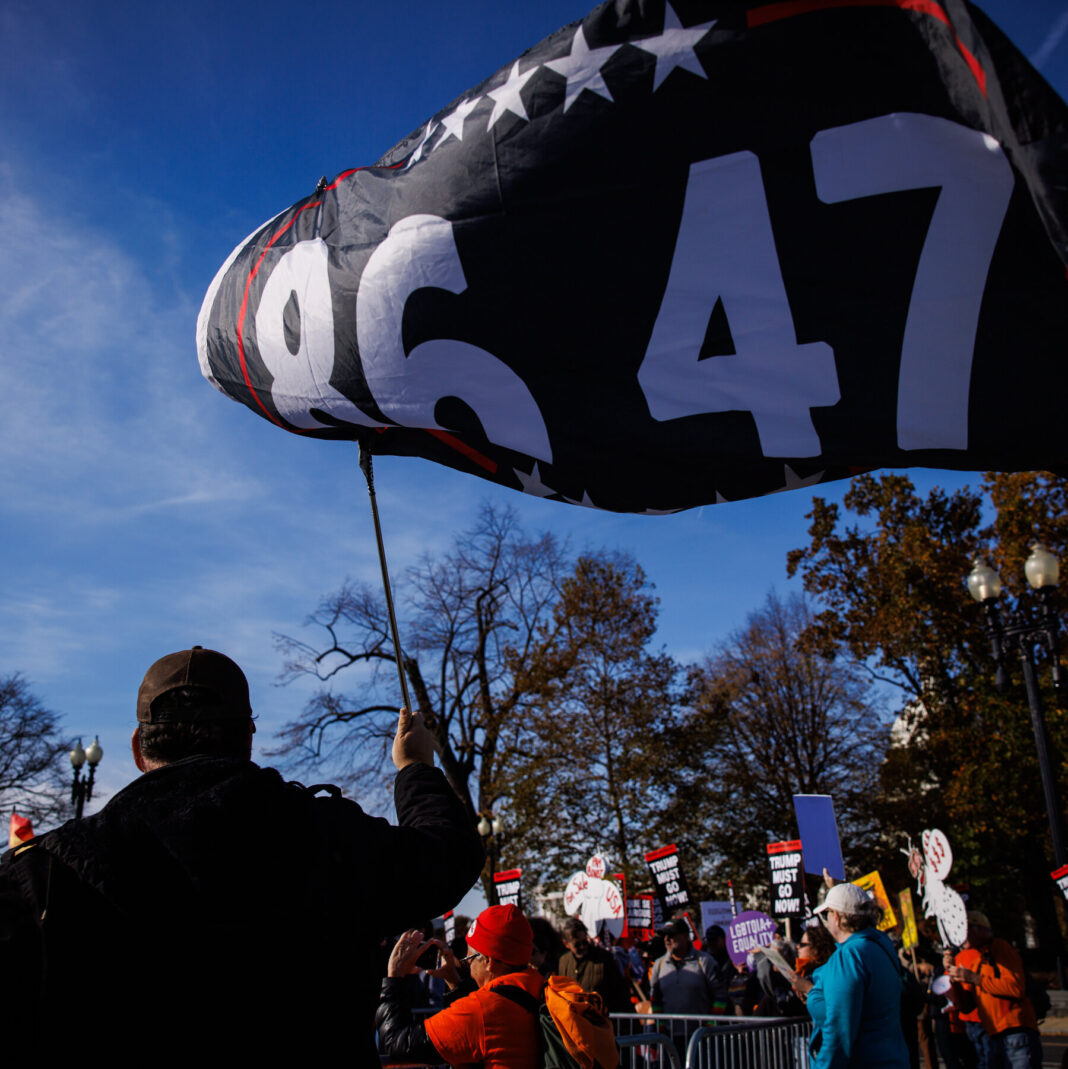
A federal judge has ruled that demonstrators cannot be forced to take down a flag reading “86-47,” determining the phrase does not appear to constitute a true threat. The decision addresses a dispute over the flag’s display during protests.
The phrase “86-47” has also led to charges against former F.B.I. director James Comey, drawing attention to its legal implications. The judge’s ruling provides clarity on First Amendment protections in this context.
The case centered on whether the flag could be interpreted as a direct threat, which would allow authorities to remove it. The judge concluded it did not meet that legal standard.
Demonstrators had argued the flag was a form of political expression, not an incitement to violence. The ruling supports their right to display it without forced removal.
Legal experts note the decision aligns with precedent protecting controversial speech, even when it references charged political figures. The ruling may influence future cases involving similar slogans.
Authorities had previously sought to prohibit the flag, citing public safety concerns. The judge’s order prevents such actions unless the phrase is shown to genuinely threaten harm.
The ruling applies to the specific case mentioned but could set a broader tone for how courts handle political symbols in demonstrations. Observers will watch for appeals or further litigation.
This outcome reinforces the balance between free speech and public order, with the judge emphasizing context matters. The phrase “86-47” remains a flashpoint, but its display is now legally protected under this decision.