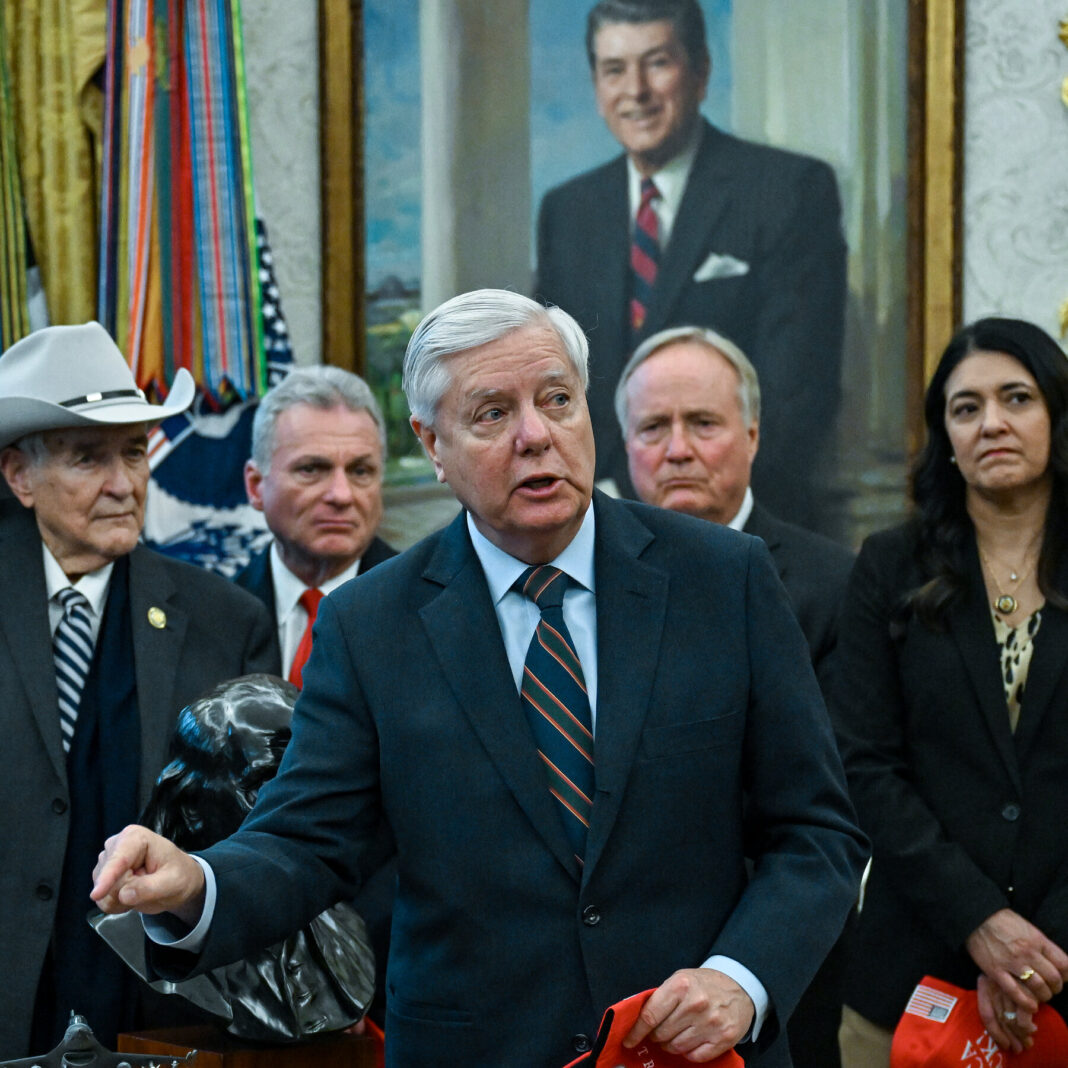
Senator Lindsey Graham’s political evolution from a vocal critic of Donald Trump to one of his closest allies redefined his influence in Washington. Graham once described Trump as a “kook” who was “unfit for office.” That harsh assessment has since given way to a powerful partnership within Trump’s inner circle.
The shift began during the 2016 Republican primaries, when Graham openly supported other candidates. After Trump secured the nomination, Graham recalibrated his stance. He explained his turnabout by stating, “I’m still in the game,” a comment that signaled pragmatism over principle.
Graham’s transition into a trusted confidant opened doors to Mar-a-Lago and key policy negotiations. His role as chairman of the Senate Judiciary Committee amplified his ability to shape judicial appointments. This position gave him substantial leverage in advancing Trump’s legislative agenda.
The senator’s journey reflects a broader trend of establishment figures adapting to the new political landscape. By aligning with Trump, Graham secured a seat at the decision-making table. His critics see the move as a surrender of integrity, while supporters view it as strategic survival.
Graham’s influence extends beyond party lines, as he frequently bridges gaps between conservative factions. His ability to navigate both the Senate’s formal rules and Trump’s informal network makes him a unique power broker. This dual role ensures his relevance in ongoing political battles.
The evolution carries risks, including alienating voters who opposed Trump in the past. Graham’s approval ratings in South Carolina have fluctuated, reflecting the polarized reaction to his alliance. Yet his staying power suggests a calculated approach to longevity in a shifting GOP.
Understanding Graham’s transformation offers insight into modern political alliances where loyalty often trumps ideology. His story illustrates how personal relationships can reshape institutional power structures. The senator remains a key figure to watch as the 2026 elections approach.