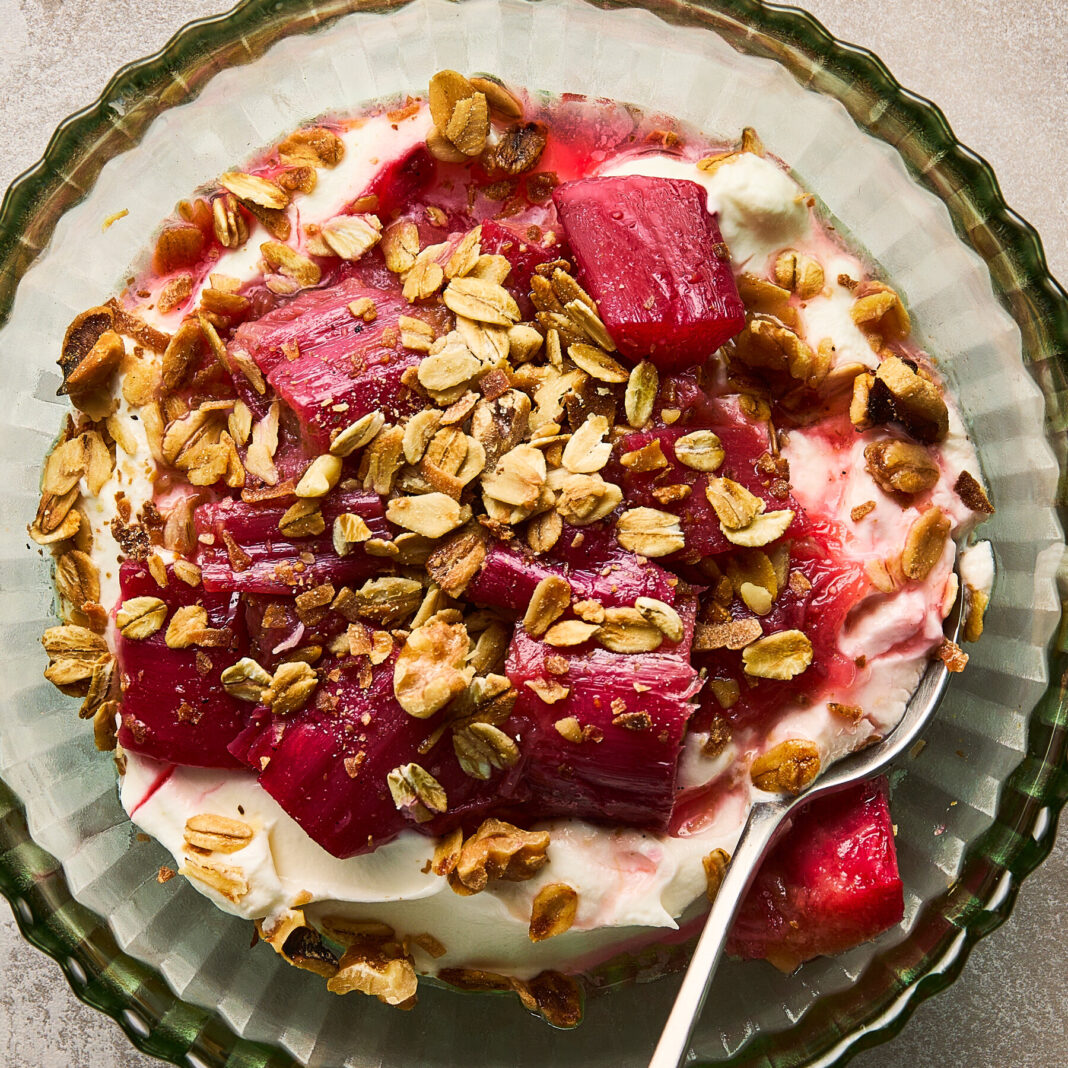
Roasting rhubarb at high heat transforms its tartness into a sweet, jammy consistency. This quick method, favored by food writer Melissa Clark, yields tender stalks that can be stored for several days.
The roasted fruit works well as a topping for plain yogurt or Greek yogurt. Its bright flavor cuts through the creaminess, creating a balanced breakfast option.
Ice cream becomes an elevated dessert with a spoonful of warm or chilled rhubarb on top. The contrast between cold, creamy dairy and tangy fruit is simple but effective.
Cakes and cookies benefit from rhubarb’s acidity. Dolloping the roasted pieces onto batter before baking adds moisture and a subtle sour note that complements sweet dough.
Preparation requires minimal effort. Trim the stalks, toss them with sugar, and spread on a baking sheet. Roast until soft but still intact, usually around 15 to 20 minutes.
Refrigerating the cooked rhubarb in a sealed container keeps it fresh for up to a week. This makes it a practical ingredient for multiple meals without repeated cooking.
Home cooks can experiment with spices like ginger or vanilla to adjust the flavor profile. The technique remains consistent regardless of added seasonings.
Breakfast bowls gain texture when paired with granola or nuts alongside the rhubarb. Dessert plates look polished when the fruit is arranged as a bright garnish.
This approach turns a seasonal produce item into a versatile staple. Its uses extend beyond a single dish, saving time and reducing food waste.