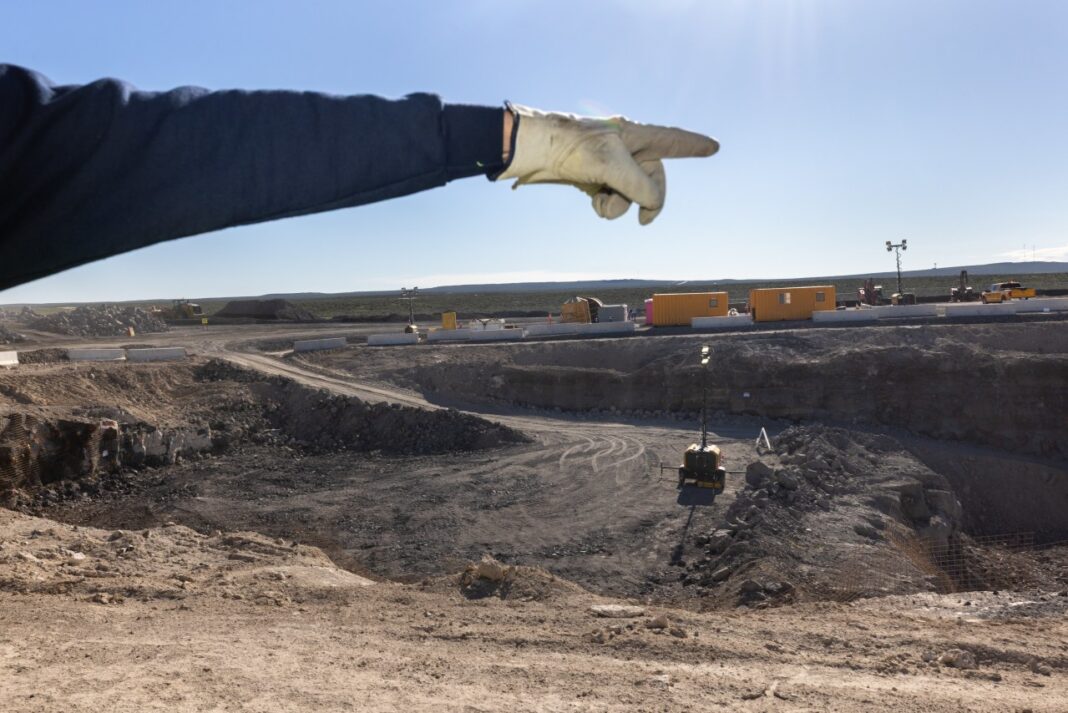
America’s nuclear energy sector is at a critical turning point. A new race is underway to construct the country’s first reactor in a generation, driven by a confluence of factors. The renewed interest in atomic power is colliding with the immense energy demands of artificial intelligence. This intersection is playing out in real time at the Idaho National Laboratory.
The Idaho site serves as the primary battleground for this revival. Several companies are actively competing to establish a foothold there. Among the most prominent is Oklo, a startup led by Sam Altman, which is moving forward with plans for an advanced fission reactor. These efforts represent a significant push to break the stagnation that has plagued the industry for decades.
Oklo’s design is part of a new wave of smaller, modular reactors. These units are intended to be faster to build and less expensive than traditional massive plants. The company’s strategy focuses on providing a reliable power source directly to corporate clients. This aligns neatly with the appetite of technology giants desperate for consistent electricity for their data centers.
The competition at the National Lab is robust, with multiple rivals pursuing similar goals. Kairos Power and X-energy are also developing their own reactor concepts. Each company is betting on distinct technologies, from molten salt cooling to high-temperature gas designs. Their shared objective is to overcome the regulatory and financial hurdles that have historically crushed such projects.
Nuclear power offers a carbon-free energy source that can operate continuously. This baseload reliability is a stark contrast to intermittent sources like wind and solar. For AI companies, the certainty of uninterrupted power is non-negotiable. The race is therefore not just about innovation, but about securing a competitive edge in the digital economy.
Regulatory approval remains the biggest single obstacle. The Nuclear Regulatory Commission has seen a surge in applications but is still adapting. The review process for advanced designs is rigorous and costly. Oklo faces the added pressure of managing investor expectations while navigating these complex federal requirements.
The financial landscape has shifted dramatically in recent years. Private capital is now flowing into nuclear startups with a velocity unseen since the 1970s. Investors are drawn to the potential for massive long-term returns. Yet, the industry carries a heavy historical burden of cost overruns and delays.
The current efforts at Idaho mark a clear departure from the past. Developers are employing digital twins and iterative testing to de-risk construction. The focus is on proving that a reactor can be built on time and on budget. If successful, this approach could set a new standard for the entire global industry.
The outcome of this race holds significant implications for the energy grid. A successful deployment here could catalyze a broader wave of nuclear construction. Conversely, failure would likely push tech companies toward other energy sources. The stakes are high, and the timeline for a working prototype is tight.
Oklo’s partnership with the lab and its aggressive schedule draw constant scrutiny. The company aims to have its first unit online by the end of the decade. Achieving this would be a historical milestone, marking the true dawn of the atomic era’s second act. For now, all eyes remain fixed on the desert floor of Idaho.